

Introduction
Welding is a normal part of manufacturing, fabrication, and repair work, but the fumes it creates are not something you can ignore. Every time metal is melted, tiny particles, smoke, and gases rise into the air. When these fumes stay in the workspace, they can slowly affect workers’ breathing, comfort, and overall health. That’s why every shop today looks for how to reduce welding fumes at the source smartly and practically.
Simply put, source control prevents fumes from entering the air at the point of creation. This method helps businesses adhere to safety regulations, keeps the workshop cleaner, and lowers the risk for welders. This blog will discuss the best instruments for reducing welding emissions, how they work, and easy actions that welders may take daily. Everything is described in simple, understandable terms.
Why Reducing Welding Fumes at the Source Matters
When you think about how to reduce welding fumes at the source, the main goal is simple: keep harmful fumes away from the welder’s chest and face. If fumes are not controlled, they can lead to eye irritation, headaches, breathing problems, and long-term health issues.
Relying solely on general ventilation or opening doors and windows is less efficient than source reduction. Fumes are prevented from spreading throughout the workshop when they are stopped at the source. This keeps everyone’s air cleaner, not just the welder working on the project.
1. Use Source Capture Welding Torches
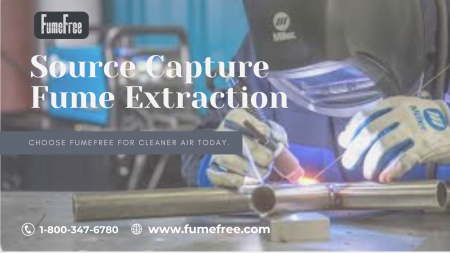
One of the smartest methods of how to reduce welding fumes at the source is using source capture welding torches. These torches come with built-in extraction. As soon as fumes come out of the weld pool, the torch pulls them in and sends them through a filtration system.
Why this works:
- Fumes are captured instantly
- No need for large ducting systems
- Welders don’t have anything extra to carry
- Works perfectly for MIG welding in tight spaces
If you truly want to know how to reduce welding fumes at the source, these torches are one of the best tools.
2. Use Portable Fume Extractors Near the Arc
A portable extractor is another very helpful method of how to reduce welding fumes at the source. These machines come with flexible arms that can be moved close to the welding arc. When placed correctly, they pull fumes away before they enter the breathing zone.
Tips to use them better:
- Keep the hood 6–10 inches from the arc
- Adjust the arm so it stays stable
- Use the right filter for your metals
- Clean or replace filters on time
This simple approach is a solid answer to how to reduce welding fumes at the source for small and medium workshops.
3. Improve Welding Techniques
Good welding technique reduces spatter and fume generation. Many welders don’t realize that skill and technique also affect how to reduce welding fumes at the source.
Here are some practical steps:
- Avoid large weld pools
- Use the lowest heat setting needed for the job
- Maintain proper angles for the torch
- Increase travel speed when possible
- Avoid welding on coatings, paint, or oily surfaces
When a welder uses clean and correct techniques, fewer fumes are produced. That’s why improving technique is a natural part of how to reduce welding fumes at the source.
4. Use the Right Welding Process
Different welding processes create different levels of fumes. Choosing the right one is a smart strategy for how to reduce welding fumes at the source.
For example:
- TIG welding produces fewer fumes
- MIG welding produces moderate fumes
- Flux-core welding produces high fumes
- Stick welding creates strong fumes
If your job allows it, switching to a low-fume process can make a big difference.
This is why choosing the right process becomes another answer for how to reduce welding fumes at the source.
5. Use Clean and Safe Materials
More fumes are produced by contaminated metals. When heated, paint, oil, rust, or coatings produce more smoke. One simple way to cut down on welding fumes at the source is to clean the metal before welding.
Simple tips:
- Use a wire brush or grinder to clean the metal
- Avoid welding over primers
- Remove grease and chemicals first
- Store metal properly to avoid rust
Cleaner metal means cleaner air.
6. Keep the Workspace Well-Ventilated
The total ventilation of the workshop is important, even if our primary focus is on reducing welding fumes at their source. The area can be kept fresh with the use of fans, mechanical ventilation, or cross-ventilation.
But keep in mind that ventilation cannot absorb fumes on its own. It must therefore cooperate with source capture tools.
Still, when thinking about how to reduce welding fumes at the source, good airflow makes source capture tools even more effective.
7. Maintain Your Equipment Regularly
Another important part of how to reduce welding fumes at the source is keeping extraction tools in good condition. A clogged filter or leaking hose cannot capture fumes properly.
A simple checklist:
- Inspect filters weekly
- Clean or replace filters as required
- Check all hoses for leaks
- Make sure airflow levels stay strong
- Keep the extraction arms tight and easy to position
Regular maintenance ensures that the shop gets the best results from every extraction tool.
8. Train Welders on Safe Work Practices
Training plays a big role in how to reduce welding fumes at the source. When welders understand how fume extraction works and how to place the equipment, they naturally make safer choices.
Training topics may include:
- Where to position the extraction arms
- How to use fume-extraction torches
- How airflow affects fumes
- Why does cleaning metal reduce smoke?
- How to stay out of the fume plume
Even simple, short training sessions can greatly reduce fume exposure.
Conclusion
At FumeFree, our focus is always on cleaner, healthier welding spaces. When you look for how to reduce welding fumes at the source, the best results come from using the right extraction tools, correct techniques, and smart workplace practices. Our solutions are designed to capture fumes instantly, improve air quality, and make welding safer for everyone. No matter the size of your workshop, reducing fumes at the source is the most effective way to protect welders and maintain a clean working environment.
FAQ
1. What is the easiest way to reduce welding fumes at the source?
Using a source capture welding torch or a portable extractor placed close to the arc is the simplest and fastest method.
2. Do general fans help reduce fumes?
Fans can move air, but they do not capture fumes. They should only support source capture systems.
3. Can welding technique affect fume creation?
Yes. Clean metal, correct angles, and proper heat settings reduce fume generation naturally.
4. How often should fume filters be changed?
It depends on usage, but most filters should be checked weekly and replaced when airflow drops.
5. Is TIG welding better for fewer fumes?
Yes, TIG welding creates fewer fumes compared to MIG, stick, or flux-core.