
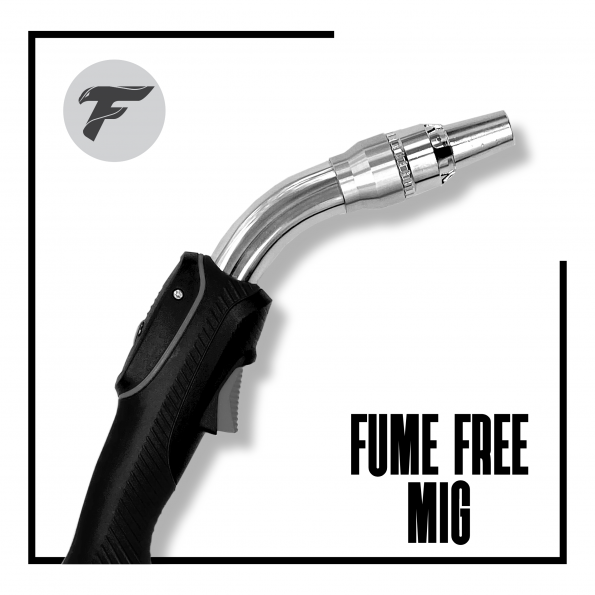
MIG (Metal Inert Gas) welding is one of the most widely used welding processes across manufacturing, fabrication, and construction. It is valued for its speed, ease of use, and ability to weld steel, stainless steel, and aluminum. It also produces hazardous fumes that require active extraction to protect welders and surrounding workers from serious long-term health effects.
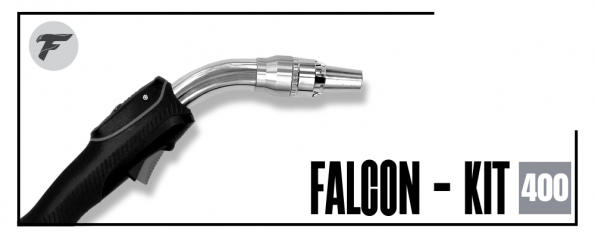
MIG welding (Metal Inert Gas welding) is a process in which a machine feeds a wire electrode and shielding gas through a welding gun. The wire melts and joins the metal pieces together, while the gas keeps the weld clean by blocking out air and preventing contamination of the weld pool.
The MIG welding process is partly automatic: the machine controls the wire feed rate and gas flow, and the operator guides the gun by hand. This makes it one of the easiest welding processes to learn, while still being fast and capable enough for professional production environments.
MIG welding is used on a wide range of metals, including carbon steel, stainless steel, and aluminum. It is fast, produces clean welds, and generates less post-weld cleanup than many other processes, which is part of why it is a common choice for both beginners and experienced production welders.
MIG welding generates fumes when the intense heat of the arc vaporizes the base metal, filler wire, and any coatings or surface treatments on the workpiece. As those vapors cool, they condense into fine metallic particulates and gases that can remain suspended in the air of the workspace.
Welding fumes can contain harmful substances including metal oxides, gases, and particulate matter. Common hazardous substances produced during MIG welding include:
These particles are small enough to bypass the body’s natural respiratory defenses and reach deep into the lungs. Long-term exposure to uncontrolled MIG welding fumes has been associated with serious conditions including lung cancer, lifelong brain damage, and kidney failure.
Fume extraction is a crucial aspect of MIG welding, designed to mitigate the health and safety risks associated with the release of welding fumes. Without extraction, fumes disperse through the shop and remain in the air long after welding has stopped. Fans and open windows reduce concentration but do not eliminate exposure.
Efficient fume extraction protects the welder and other personnel from inhaling harmful substances, reducing the risk of respiratory issues and long-term health problems. Fume extraction also enhances overall workplace safety by minimizing the potential for fire hazards associated with certain welding fumes.
The choice of fume extraction system depends on factors including the welding process, materials used, and the size of the work area. Regular maintenance and proper use of fume extraction equipment contribute to its effectiveness in safeguarding the health of those involved in MIG welding operations.
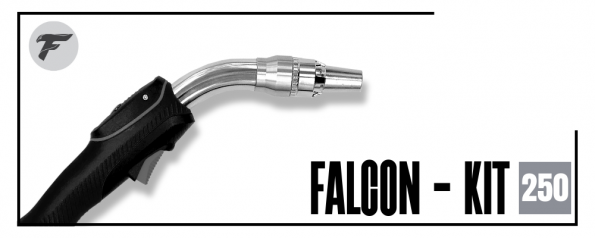
Source-capture fume extraction works by directly capturing and removing harmful welding fumes at their point of origin, through a nozzle or capture device positioned close to the emission source. This localized approach prevents the dispersion of harmful fumes and particles into the surrounding environment, promoting a safer and healthier workspace.
Fume extraction systems for MIG welding typically consist of a hood or capture device positioned close to the welding arc. The hood is connected to a ventilation system that draws fumes away from the weld zone, filters them, and either returns clean air to the workspace or expels the captured fumes outside. Source-capture systems are the most effective approach: by capturing fumes before they disperse, they provide significantly better protection than general ventilation or dilution-based approaches.
FumeFree’s 8XE MIG Fume Extraction Torch is a source-capture system that integrates extraction directly into the welding gun, capturing up to 98% of welding fumes at the source.
Selecting the right fume extraction system depends on your welding process, materials, and workshop layout. There are several types of MIG fume extraction systems available:
These extractors are connected directly to the welding torch and capture fumes right at the source. They are highly effective because the capture point moves with the weld, eliminating gaps in coverage. FumeFree’s 8XE MIG Fume Extraction Torch is an example of this type.
Mobile units that can be moved around the workshop. Well suited to smaller welding shops or welders who change their work position often. Portable extractors are flexible and can be positioned close to the welding arc.
Fixed arms installed above or beside welding tables. The arm is pulled close to the weld zone during welding, then repositioned as needed. Effective when consistently positioned, but require the operator to adjust the arm with each new work position.
The selection of fume extraction equipment should take into account the welding process used, the materials being welded, and the size of the work area. Adherence to occupational health and safety guidelines and regulations ensures a safe working environment.
MIG (Metal Inert Gas) welding is a welding process in which a machine feeds a wire electrode and shielding gas through a welding gun. The wire melts to form the weld, while the gas protects the weld pool from atmospheric contamination. MIG welding is partly automatic, with the machine controlling the wire feed and gas, and is widely used because it is fast, clean, and easy to learn.
MIG welding produces fumes containing hazardous substances including manganese, hexavalent chromium, iron oxide, zinc oxide, nickel, and aluminum particles, depending on the base metal being welded. Inhaling these fumes over time has been associated with serious health conditions including lung cancer, lifelong brain damage, and kidney failure. Fume extraction systems remove these fumes from the welder’s breathing zone before they can cause harm.
MIG welding can produce fumes containing metal oxides, gases, and particulate matter, including manganese (linked to neurological damage), hexavalent chromium (a known carcinogen from stainless steel welding), iron oxide, zinc oxide (from galvanized steel), nickel compounds, and aluminum particles. The specific substances present depend on the base metal, filler wire, and any surface coatings on the workpiece.
Source-capture fume extraction is a method of welding ventilation that captures fumes directly at their point of origin, through a nozzle or capture device positioned close to the welding arc, before they can disperse into the surrounding workspace. It is the most effective approach to fume extraction because it removes fumes before they enter the welder’s breathing zone, rather than diluting them after dispersal.
Yes. The MIG welding process is simple and well suited to learning because the machine controls the wire feed and gas, leaving the operator to focus on guiding the gun. Even first-timers can produce strong, clean welds with the right setup and basic guidance.
Yes. With the appropriate wire and shielding gas selection, MIG welding can be used on aluminum. The process and consumables differ from steel MIG welding, so the correct setup is important.
Usually, yes. The shielding gas protects the weld from atmospheric contamination. However, with flux-core wire, MIG welding can be performed without external shielding gas.
The MIG welding process can be used on carbon steel, stainless steel, and aluminum, with the appropriate wire and gas for each material.