
Introduction
The welding industry is transforming due to automation. Welding robotic systems are being integrated within manufacturing plants, car production units, heavy fabrication workshops, and metal processing facilities. While robotic systems enhance speed, precision, and productivity, they have a downside – the welding fumes produced and the impact on workspace air quality. Therefore, Robotic Welding Fume Extractors are a necessity in modern-day facilities. This blog will cover the importance of Robotic Welding Fume Extractor, the inner workings of the systems, and the benefits the units provide to automated workspaces.
The Need for Fume Control in Automated Workspaces
Robotic welding cells will run for extended periods of time. The production processes will run without the need for operator intervention. While this increases production, the downside is also the increased volume of fumes produced.
The welding process involves the creation of fumes, which are a combination of different harmful particulates and gases. The fumes are a result of the heating and melting of metal and the chemical reactions that produce metal oxides and carbon monoxide. The other contaminants produced are in an aerosol form, and in a robotic welding system, they are highly concentrated and require an effective fume extraction system.
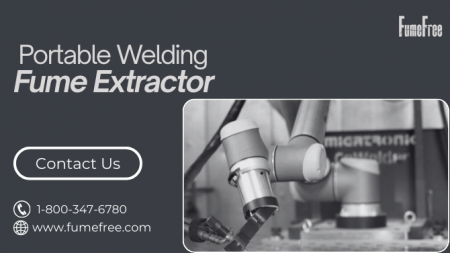
Robotic Welding Fume Extractors are specially designed units that capture the produced fumes and prevent the contaminants from spreading throughout the workspace.
What is Robotic Welding Fume Extraction?
This is a specific kind of system designed to capture and filter fumes during the automatic robotic welding, and it can be integrated directly into robotic welding cells or put around the cells.
Unlike regular exhaust systems, robotic exhaust systems care ustom to the specific unit/robot, and the system is designed for a specific range of volume welding and for a continuous period of time. These systems allow for the free, uninterrupted movement of the robotic cells.
How Robotic Welding Fume Extraction Works
A Robotic Welding Fume Extraction system works on three basic principles.
1. Fume capture
This is done by the use of some sort of capture hood, or arms/ or enclosure to capture the fumes as they are being generated during the welding arc.
2. Filtration
This is the part of the system that is able to capture very fine particles and very fine contaminants that are hazardous.
3. Release of clean air
In this step, the air is released, and it is done by either recirculating it, which can be done on the workspace, or, lastly, it can be released on the outside of the working station.
It is worth noting that numerous filters, and even HEPA filters, are able to capture even the smallest particles.
What are the advantages of Robotic Welding Fume Extraction?
1. Improved Air Quality
Continuous welding can produce a lot of smoke and a lot of fume. Robotic Welding Fume Extraction helps keep the air clean.
2. Worker Safety
Although the workforce may be automated, there is still a person there to do some oversight, maintenance, or even some inspection work. It helps to reduce exposure to those welding fumes.
3. Equipment Protection
Robotic components, sensors, and control panels may be damaged by settling welding fumes. Performance may be affected by this over time. A suitable Robotic Welding Fume Extraction system prevents fume and dirt contamination and increases the life of the equipment.
4. Safety Standards Compliance
Robotic Welding Fume Extraction System Installation provides business customers with safety compliance.
5. Productivity Improvement
Maintaining an unclogged airflow improves the overall atmosphere of the workspace, leading to fewer maintenance issues. This highly efficient Robotic Welding Fume Extraction System enables the uninterrupted operation of the robots.
Types of Robotic Welding Fume Extraction Systems
Because of the varying size of workspace and scale of production, there are various kinds of workflows.
Centralized Extraction Systems
These systems are more suitable for bigger factories, as they allow multiple robotic welding stations to be connected to one large centralized unit for filtration.
Enclosed Robotic Cells
These cells are completely enclosed and come with fume extraction to maximize fume containment and filtration.
Source Capture Extraction Arms
These capture fume arms are flexible and are able to be positioned directly to the welding point to capture the fumes. They are ideal for smaller robotic systems.
Downdraft Tables
In some of the automated setups, the downdraft systems are used to pull fumes downward through the perforated surfaces. The choice of a Robotic Welding Fume Extraction system is influenced by the volume of production, the layout, and the type of welding process.
Key Features to Look For
When selecting a Robotic Welding Fume Extraction system, consider the following features:
- High airflow capacity
- HEPA or multi-stage filtration
- Easy filter replacement
- Spark arrestors
- Automatic cleaning systems
- Compact design for robotic cells
Modern systems are designed to work seamlessly with automation without interrupting robotic movement.
Challenges in Automated Welding Without Extraction
Without proper Robotic Welding Fume Extraction, automated workspaces may face several problems:
- Poor indoor air quality
- Health risks for workers
- Dust buildup on robotic arms
- Frequent maintenance
- Reduced sensor accuracy
- Regulatory penalties
Ignoring fume control can lead to long-term operational and health issues.
Robotic Welding and the Future of Clean Manufacturing
Automation is getting more sophisticated as industries transition to Industry 4.0 and smart factories. Clean air is still a major concern, though. Automatic filter cleaning and sensor-based airflow monitoring are now features of Smart Robotic Welding Fume Extraction systems.
These developments guarantee the continued safety, effectiveness, and environmental responsibility of automated welding environments.
To maintain sustainable production practices, businesses that invest in automation must also invest in appropriate robotic welding fume extraction.
Why Robotic Welding Fume Extraction is a Smart Investment
Although installing a Robotic Welding Fume Extraction system requires an initial investment, it offers long-term benefits:
- Reduced healthcare risks
- Lower maintenance costs
- Better equipment lifespan
- Higher compliance standards
- Improved brand reputation
In automated industries where productivity is critical, clean air is not optional—it is necessary.
Conclusion
For factories using automated welding systems, robotic welding fume extraction is crucial because improperly removed welding fumes can be hazardous. A lot of smoke and small metal particles are released into the air when robots weld all day, which can have an impact on the general working environment and the health of the employees. For this reason, maintaining safe and clean air requires the use of an appropriate fume extraction system. In order to help industries maintain a cleaner, healthier, and more productive workplace, FumeFree offers dependable robotic welding fume extraction solutions that capture fumes at their source.